
Today, the Porsche GT3 R Hybrid race car debuted at the Geneva Motor Show. This unveiling occurs 110 years after Ferdinand Porsche developed the world’s first hybrid automobile, the Lohner-Porsche. Porsche engineers decided to expand on previous designs by creating a hybrid with no batteries. Instead of batteries, braking energy is stored in a flywheel generator that can spin up to 40,000 rpm. Power from the generator is available for six to eight seconds following each charge, much like last year’s Formula One race cars. When the driver wants the extra boost (as much 160 horsepower) a button is pressed on the steering wheel and the stored power is directed to electric motors on the front wheels. This comes in addition to the 480 horsepower generated at the rear wheels by the GT3 R’s 4.0-liter six-cylinder engine. Besides adding power for accelerating and passing, this efficient hybrid system can also save on fuel consumption. This potentially reduces the number of pit stops and also saves weight, as the car needs to carry less fuel on board. While you won’t be able to park this car in your driveway (it’s intended for LeMans endurance racing in 2010), it is based on a production 911. A future 911-type hybrid for public consumption (like the prototype 918 Spyder) is “open for discussion,” said a Porsche spokesperson. Intelligent performance indeed.
I’ve been a fan of Leica cameras since I bought a used M3 rangefinder back in 1980. Since then I’ve come to value their mechanical precision, durability and astounding image contrast and shadow quality. Leicaflexes, M4s, M6s, R6s and R8s have passed through my hands over the years. With each succeeding model, the innovations have impressed just as much as the consistent “look” provided by the superb German optics. Leica has just introduced a brand new Leica S-system that combines 35mm handling with a medium format digital sensor. The first of these S2 cameras and lenses are just now being delivered, and I should be testing one soon. Reports indicate this is a supremely capable professional tool with quality that approaches the latest digital Hasselblad. Unsurprisingly, the S2 carries a price tag that rivals the quality of the images it produces. This landmark camera joins the venerable Leica M9 full sensor 35mm digital rangefinder and compact fixed lens X1 to bring the German based Leica Company firmly into the 21st century. For more, visit Leica’s website:
Photography is much more than pushing a button. It’s more than composition or lighting or marketing. Truly being in the moment of any artistic endeavor requires a commitment to yourself without considering some payoff down the line.
Here are just a few ways to nurture the poetic element in your photography. The first step is to slow down and play in the moment. This means loving what you do. If waking up early to get the right light or having to stay up late editing your work becomes a job rather than a passion, then it will be hard to be effective in practicing your craft fully. The simple reality is that you must feel driven to do it, because if you shoot without enthusiasm it will show. The key here is to continue to do what you want, and be open to change. Ground your work in the journey – not the arrival. Find out as much as you can about who you truly are. Be a human be-ing, not a human do-ing. Base your journey on purpose – on knowing you have a unique reason for being here, a special vision or message - an insight into a harmonious part of life that you can tap into. This requires not just belief, but a conviction that nothing and nobody can stop you from doing what you were meant to do. Believe in yourself and realize what your gift is worth. Too many photographers give their images away and undermine their work’s perceived value. If you don’t believe in yourself, don’t expect anybody else to.
Positive thinking is useful in getting out of a rut when you are focusing on what isn’t working, but even more important is for you to feel quietly grounded and secure in that time between positive thoughts. Ideally, you want to be calm and focused, not scattered, when you are working. Accept no limitations, and base your work on your love of doing it, not on some promised outcome. Remember, a career in photography is not a 100 yard dash. It’s a marathon. Color photography pioneer Ernst Haas once remarked, “Never expect too much. Be open to chance, for in this chance you will find your order.” This amazing photographer was my mentor, and I am deeply indebted to him for helping to guide me on my journey. You can learn more about Ernst Hass’ philosophy at:
Yoshino cherry trees will be blooming next month in the nation’s capital. March 27 - April 11 marks the National Cherry Blossom Festival this year. That’s when the banks of the Potomac River and the open National Mall will likely be exploding in fragrant color. The weather will also be more hospitable by then with temperatures in the low 60’s. With so many large parks, the city is ideal for walking tours so bring your camera! Washington, D.C. is a study in contrasts for the first time visitor. While the city is a prominent center for national and international media, illiteracy is still a major problem within the predominantly African American population. Home to the FBI and CIA, D.C. continues to have a higher than average crime rate for cities its size. And the Department of Transportation’s presence has done little to relieve the congested traffic. Still, this fascinating area is worth a visit for anyone interested in American government, history or architecture. Some of the top U.S. buildings, including the White House, the Thomas Jefferson Memorial, the US Capitol, and the Lincoln Memorial are here. All of these structures will be framed by the pink blossoms soon, so if you want a different kind of spring break – this is a great choice.
After a few days away, it’s nice to come back to my blog with some classic music. “Ol’ Blues Eyes” was never in better form than on this 1960 chart-topping album. In The Wee Small Hours or Watertown might appeal more to the “sad” Frank fan, but with spring just around the corner I’m in the mood for this collection of breezy mid-tempo numbers and ballads. With acclaimed conductor Nelson Riddle, Sinatra created the definitive versions of such songs as “How Deep Is The Ocean”, “I’ve Got A Crush On You”, and “Embracable You”. No matter how young or old you feel, Frank Sinatra is good for the soul – his voice and delivery is fitting for any occasion and considered the best by many. Mobile Fidelity recently released a gold CD and 180 gram LP of this timeless Capitol album, and it rivals their earlier release in the limited edition vinyl box set. Enjoy.
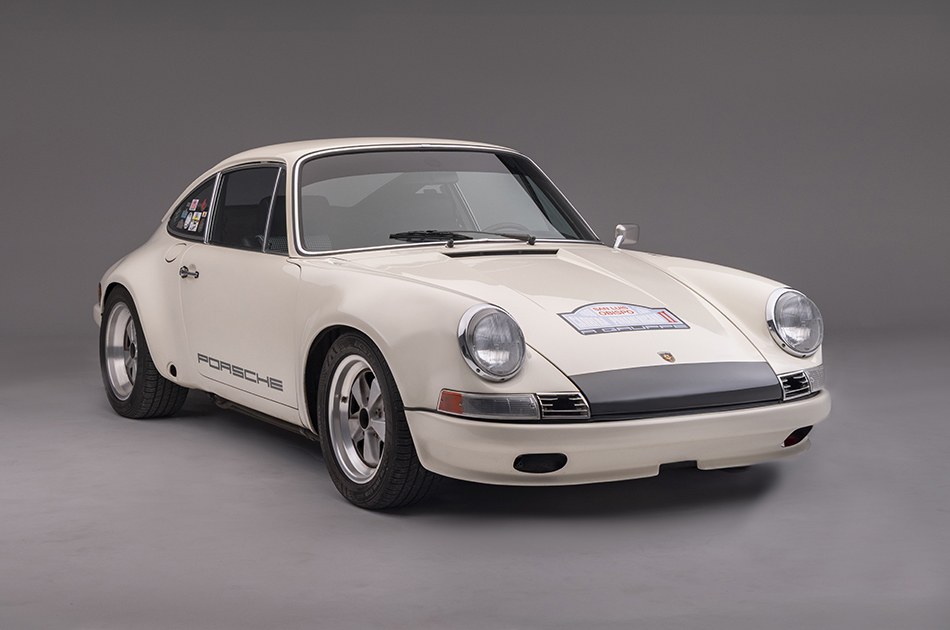
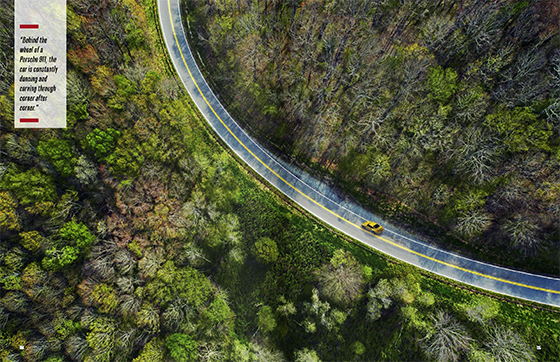
If you are a Porsche 911 fan and own one of these cars, you may be itching to make some mods or have already done so. The usual intent is to make the car go or look faster. If it’s go faster you are after, money may be better spent on learning from a professional in a safe environment. As a nationally certified Porsche Club of America driving instructor, I’m lucky to have the opportunity to learn from some of the best drivers in the business, and I continue to do so. One of the key basics taught is that traction is dependent on weight, center of gravity, grip and the smooth application of steering, throttle and brakes. Being smooth is key and takes seat time to perfect. With a rear engined sports car like the 911, you will experience understeer in tight corners because these cars are light in the front relative to the back. If you enter a tight corner at speed and not enough weight transfers under braking to the front of the car just before and during initial turn in, you will get understeer. Slowing down a bit more before the corner will usually remedy this. Another technique that can work to reduce understeer at the track is to carry the last of your braking deep into the corner, then smoothly get off the brakes, look up the road as you turn in, and start to gradually feed in the gas as soon as you feel the car beginning to rotate. Be sure to unwind the steering wheel as soon as possible after passing the corner’s apex, and be ready to make any steering corrections as needed if the car begins to oversteer under acceleration. You can also use trail braking (slowly rolling off the brakes after initial turn in) when you want to “point” the 911, and throttle steering the car isn’t an option. Trail braking should be used judiciously however, and not as a crutch for braking too late or having the wrong line. Sometimes you just have to go slow to go fast. Mid speed sweeper understeer can occur if you have not “set” the car with a throttle lift or light brake just before entering the turn. The goal here in a 911 is to throttle steer the back end of the car after getting it to rotate. 911s oversteer under certain conditions, as when braking or lifting off the throttle in the middle of a turn, or when excessive or abrupt throttle is used coming out of a turn. Bumpy, downhill off-camber bends in the wet are not helpful either! A speed sensitive limited slip differential can help somewhat in this regard. Remember to plan ahead as well as to look ahead as far as you can, and be smooth with all your inputs. Porsche engineered the initial understeer/final oversteer characteristic out of the 911 as much as they could, but it was not possible to eliminate it altogether so be careful. Fortunately, as many of you know, these “unique” characteristics of the 911 can be used to your advantage once you have learned to control them. Have fun, and be safe!
If you are a sailing fan, or even if you are just into technical innovation and design, be sure and check out the full race coverage and live streaming at the link below. Two groundbreaking 90 ft. racing sailboats - a catamaran from Switzerland with a traditional mainsail and jib v.s. a revolutionary USA trimaran with Star Wars technology and an enormous wing sail - duke it out on the high seas near Valencia, Spain. Much like Formula 1, this level of competition is the highest in the world with innovation that staggers the imagination. Just watching them fly a hull at 25 knots of speed in 10 knot winds is simply amazing:
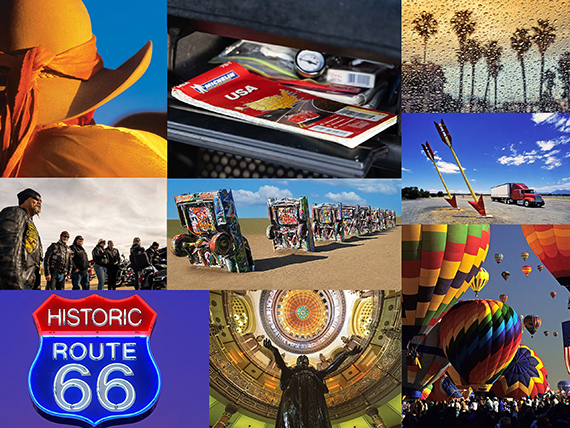
Next month I’ll be traveling to one of my favorite big cities: Houston, Texas. The purpose of my visit is to promote my forthcoming book, Imagine A Nation: In Search of America. I’ll be meeting with publishers and gallery owners in preparation for 2012, my hoped for publication date. The venue is the famous FotoFest, a biennial photographic community gathering which this year features contemporary U.S. photography. I’m really excited by all the possibilities that lay in store and the people I will be meeting. In my spare time I’ll be sure and take in some ribs and architectural photography! For more information you can visit my book site and Fotofest:
Last night I hosted a listening session for a few of my music-loving friends. I’ve known these guys for several years so it’s always a welcome ritual to share some vibes with like-minded spirits. The purpose of this semi-annual gathering is to exchange ideas about meaningful music, the photo industry, recent travels, and maybe a car story or two. We generally talk a bit, share some pizza, then go down to the listening room and play some tunes. It’s usually just CDs, but occasionally we spin some SACDs and vinyl. On this occasion my buddys brought a wide variety of music: Smog’s A River Ain’t Too Much To Love, One EskimO S/T, Blue Nile Hats, Melissa Manchester’s Nowhere To Go, Damian Rice 9, Hans Theessink’s Songs from the Southland, and Billy Cobham’s Spectrum. In addition, a few sonically superb jems such as Chris Whitley’s Dirt Floor, Roy Harper’s Stormcock, Laura Nyro’s Angel in the Dark, Snow Patrol’s Final Straw “Run”, Black Sabbath’s Paranoid “Iron Man” (on the recent Deluxe Edition CD) and Genesis’ Trick of the Tail on an older Japan for USA original CD were offered up for consumption. The evening ended with Neil Young’s latest release, Dreamin’ Man Live ’92. Thanks guys for coming, I had a blast. Here’s to the next one…
There are many ways to look at photography. Like music, one can see it as an expressive art form that captures the always changing moment. If you break down a photograph into only four elements you will probably come up with something like this: light, form, line and color. Corresponding elements in nature are: fire, air, earth and water. Going further, the elements of man reveal another sequence: heart, mind, body and soul. There is also a fifth element to consider – that of moment or space or consciousness. It is this fifth element that can elevate the common photograph to one that exceeds our expectations – to one we cannot memorize. What makes a memorable photograph is nuance or a subtle gesture combined with colors and symbols that strike a universal chord. The photographer who has a deep passion or connection with the subject is more likely to be ready when this appears in the viewfinder. Finally, it is the viewer’s intellectual or emotional response to the image that makes a lasting impression on the consciousness that transcends experience. Joseph Campbell once paraphrased Heinrich Zimmer as saying: “The best things in life are transcendent, the second best are misunderstood, and the third best are conversation.” It seems even photographs can be put into philosophical terms sometimes.